Author Archives: Walker

Perfecting the College Football Playoff

Jumping right in – I spend an inordinate amount of time thinking about league and playoff structure for various sports. I’ll let a future therapist get to the reason behind this particular interest of mine. For now, please just take it for granted that I have my Malcom Gladwell 10,000 hours in this subject, honed via a lifetime of sports fandom and a half decade plus spent drawing up round robin, double elimination Hawaiian ping pong tournaments at the Circus Club. I even take my talents on the road for bachelor parties.

*Whipping up a nice little 14-team, 3 group round robin tournament for the boys.

On to the task at hand – perfecting the College Football Playoff. 

Now I say perfecting because what we’ve got, as of this year, is acceptable. 12 teams. the top 4, who must be conference champions, get a bye. The other 8 participants are at-large (meaning voted in). The at-large teams play an initial round at the home field of the higher-ranked team. Following that, it’s on to neutral fields for the quarterfinals, semis and title game. This is exponentially better than the 4-team playoff, and we’ll not even bother harking back to the BCS. But we’ve still got some obvious issues. There is the questionable significance of conference championship games, lack of clear path for the little guys, and general bits and bobs we can improve upon. 

So, I’ve decided to approach a revamp here from first principles. Here are the overarching goals for my structure and the raison d’etre for how it’s laid out.

No meaningless games – The goal of a good game designer should be to lend some significance to every regular and postseason game – no meaningless games, both teams involved should have something on the line.

Objectivity – We’ll always have some subjectivity in college football over where teams should be ranked. It’s such a Balkanized system that the central authorities need to be able to thumb the scale a bit.However these arguments needn’t be front and center for every debate.My system still includes at-large bids at the margins, but “what it takes” to make the CFB playoff will be imminently clear from the first snap of the season.

Accessibility – Call me old fashioned, but I believe that every single D-1 FBS team should have a chance at playing their way into a national title. Under the current system, would a 13-0 Jacksonville State team (C-USA) make the 12 team playoff? Maybe, and hopefully one year we’ll find out. But it’s not guaranteed, and we can be certain that most any 12-1 team from a lower conference wouldn’t have a chance to make it. I’m under no illusions that all conferences are equal, but I say let them play it out on the field. So I’ve built an on-ramp for all these schools to touch greatness.

Incorporating the existing framework (i.e. Conference Championship Games) – A truly ideal system would probably do away with these altogether. However there’s zero chance these money making conference t1itle games go away entirely. So being the pragmatist that I am, I’ve folded these into the playoff itself, and now they have clear benefits and consequences to the participants. The Lower Conference title games are part of round 1, while the Upper Conference title games are part of round 2. More details below.

Recognizing Conference Inequality – I believe in equal D-1 opportunity, but we can’t ignore the obvious talent gap between conferences. So I’ve tranched the conferences into Upper (SEC, Big 10, ACC and Big 12) and Lower (American, C-USA, Mid-American, Mountain West and Sun Belt). As you’ll see in the tournament structure, this classification gives a significant advantage to teams in Upper Conferences. Two quick points on this: First, this advantage already exists in the current system, just informally. Second, under my regime, the Upper and Lower designations are subject to annual reclassification based on inter-conference play.2

Now that you’ve patiently read my lengthy preamble, here’s the structure and how it would have played out this season.

First, the high level elevator pitch. After that, I’ll go into detail with examples from the current year.

Elevator Pitch. 24 teams, 6 rounds, starting with a upper and lower bracket.. The opening round consists of the 5 lower conference title games and 3 at large games (the lower bracket). The lower bracket is single elimination. The best 4 conferences will play their title games in week 2 (the upper bracket), thereby skipping the opening round of games. Winner from the upper bracket go on to the quarterfinals. Losers from the top 4 conference title games drop to the lower bracket, with a chance to play into the quarterfinals. Quarterfinals onward are a regular 8-team tournament. 

So, finishing top 2 in your conference (thereby making the title game) gets you into the playoffs.3 Any D-1 school can play their way into the tournament. They just might have to do it starting farther back than the blue blood conferences. At large teams, and GDIs4 like Notre Dame have a path. Teams that make the SEC, Big 12, ACC or Big 10 Championship games get rewarded with a bye relative to any 3rd place teams in those conferences.5 

Deeper Dive...Who makes the dance?

24 Teams, consisting of:

  • 18 teams, by virtue of reaching their respective conference championship games. For most conferences, this just means the two teams who finished first and second in the regular season.
  • 6 at large bids. Can be independent schools (looking at you Notre Dame) or also-rans from the top 4 conferences.
  • Below are the 24 teams who would have qualified this year.
TeamMethod of Qualification
Oregon*Big 10 Title Game
Penn State*Big 10 Title Game
Texas*SEC Title Game
Georgia*SEC Title Game
Arizona State*Big 12 Title Game
Iowa State*Big 12 Title Game
SMU*ACC Title Game
Clemson*ACC Title Game
Boise StateMountain West Title Game
UNLVMountain West Title Game
ArmyAmerican Athletic Title Game
TulaneAmerican Athletic Title Game
MarshallSun Belt Title Game
LouisianaSun Belt Title Game
Jacksonville StateC-USA Title Game
Western KentuckyC-USA Title Game
OhioMAC Title Game
Miami (Ohio)MAC Title Game
Notre DameAt Large
Ohio StateAt Large
TennesseeAt Large
IndianaAt Large
AlabamaAt Large
MiamiAt Large

*The top 4 title games aren’t played until Week 2, so these 8 teams a get a bye.

Week 1 

  • Who is playing:
    • 5 Conference Champion Games. The Bottom 5 conferences play their championship games in their current format. 
    • 3 At Large Play-in Games. The 6 at large teams play at the home field of the higher seed. For example if Notre Dame is the highest At Large team and Miami is the lowest, then the Irish will host the Hurricanes.
    • Who is on a bye: The Top 4 Conference Championship games will take place Week 2. So those 8 teams all have a bye.
  • Who is left: After the Bottom 5 Conference Championship games and the 3 at large play-ins, you’re left with 8 survivors from this week. All are re-seeded for Week 2 matchups.
  • No need for a bracket just yet as the winners will be reseeded after this round.
Week 1 Play-In Games
GameTeam 1 vs. Team 2*
American Athletic Title GameArmyTulane
C-USA Title GameJacksonville StateWestern Kentucky
MAC Title GameOhioMiami (Ohio)
Mountain West Title GameBoise StateUNLV
Sun Belt Title GameMarshallLouisiana
At Large Game 1Notre DameMiami
At Large Game 2Ohio StateAlabama
At Large Game 3TennesseeIndiana

*Projected winners indicated in bold.

Week 2

  • Who is playing:
    • 4 Conference Champion Games. The Top 4 conferences, who had a bye Week 1, now play their championship games.
      • Winners move on to Week 4 and get a next round bye. Losers keep going, playing one of the “Round 2” winners in Week 3.6 
    • 4 “Round 2” Games. The 8 teams who survived Week 1 are now randomly drawn into games against other week 1 survivors.
      • Only restriction on the matchups is that at-large teams can’t be drawn together.
      • In a game between a conference champion and an at-large team, the conference champion gets to host.
      • In a game between two conference champions, the higher rated conference gets to host.
  • Who is on a bye:
    • Nobody, everyone in contention is playing this week.
  • Who is left:
    • From the upper the bracket, the four winners are now off to the quarterfinals with a week off before that starts. The losers from the top half will now drop down to play the winners from the bottom. For those keeping count, we are now down to 12 teams…on to Week 3!
Week 3 Games
Double Elimination Games (Upper Bracket)
Big 10 Title GameOregonPenn State
SEC Title GameGeorgiaTexas
ACC Title GameClemsonSMU
Big 12 Title GameArizona StateIowa State
Single Elimination Games (Lower Bracket)
Game 1Boise StateTennessee
Game 2Notre DameJacksonville State
Game 3ArmyMarshall
Game 4Ohio StateOhio

*Winners projected in bold for example purposes.

Week 3

  • Who is playing:
    • 4 “Round 3” Games. Losers from the top half of last weeks’ bracket get to host a winner from the bottom half of the bracket. Match-ups to be re-seeded.
  • Who is on a bye:
    • Last week’s winners from the SEC, Big 10, Big 12 and ACC championship games.
  • Who is left:
    • The four winners of this week and the four who got to sit this round out. We’re now down to 8, and from here it’s pretty simple!
Week 3 Games
Game 1TexasArmy
Game 2Penn StateBoise State
Game 3Notre DameSMU
Game 4Ohio StateIowa State

Weeks 4 – 6

  • Now we’ve got a nice, familiar 8 team bracket. This is all single elimination. For the quarterfinals, the 4 “Top Conference” Champions get to host a winner from the lower bracket. Conference rivals to be place on opposite sides of the bracket if possible.7
  • For the semis and final, these are neutral sights at the traditional Rose Bowl, Sugar Bowl, etc.
  • Winner takes all. For those who had to earn their way via Week 1 play, this would mean 6 straight wins. If a Big 4 champ runs the table, they can get it done in 4 games. 

Silencing the Haters

Let’s get the counterarguments out of the way. At a potential six playoff games for those Week 1 teams, we’re looking at extending their season by a whopping 50% of games. Even the NBA, where the playoffs take forever, a team could only max out at extending their season by 20% if every series went to game 7. (Bonus points if they also had to go through the play in game). To this critique I say… tough. You want to get paid like professional athletes? You can play a few more nationally televised games. For lower conference teams, this will provide exposure and dollars.

One more criticism to raise and then discard – teams from the lower conferences, and GDIs like Notre Dame and UMass, will have a longer road no matter how well their regular season goes. Again I say, tough. Join a conference, or get your conference boosted up the coefficient rankings. There’s the not so remote chance that the top 40 schools jettison entirely the poorer 2/3rds of division 1 schools. At least this keeps everyone in the dance.

Revisiting First Principles

Time to circle back and ensure we’ve accomplished what we set out to do. 

Does every game matter? Absolutely – this system puts a huge premium on the regular season for the big dogs who need to finish top 2 to guarantee a spot. Further, the conference title games now have a clear benefit for the participants, with plenty at stake once you’ve made it that far. As an added bonus, the conference coefficient, which determines the top 4 and lower 5, would lend excitement to every interconference matchup. San Jose State vs. Stanford8 would have Boise State and Clemson fans watching intently. 

Is it objective and accessible? Yup, every team from every conference gets a shot and there’s still the excitement of committee rankings when determining the 6 at large teams. There’s no point in whining about strength of schedule anymore. Conference games are most important and pre-determined. Out of conference heavyweight games have more potential benefit than downside, as they can give you the nudge in an at large bid but won’t go against the straightforward conference qualification method.

So in sum, we as fans get more games on tv, winning programs get extra home games, and everyone makes much more money. This is the future I want and we all deserve. Please forward this to your local member of Congress so we can reach the promised land.

  1.  For a counter example, look at the recent ACC Championship game between SMU – Clemson. Clemson won and so played its way into the final 12. The committee ultimately didn’t fully punish SMU for losing and kept it in. That’s fine, but it was a subject call by the committee, and if you’re going to make two teams play an extra game, the consequence, and benefit, of winning or losing should be set upfront. ↩︎
  2. For those familiar with the UEFA Champions League, we’d just use a similar coefficient to determine respective conference rankings. Fun bonus of added significance to out of conference regular season and bowl games. ↩︎
  3. The Sun Belt has an East and West division, whose respective winners make the title game. So technically a slight difference, but close enough for our purposes. ↩︎
  4. God-damn independents ↩︎
  5. Compare to a scenario this year , Tennessee vs Texas. Texas qualified for the SEC title game and lost in OT to Georgia. They have a slightly higher seed that Tennessee, but the Vols got a week off and now they’re slotted into the same round of the tournament. Not a disaster, but again the point of this article is to perfect the college football playoff, and clearly we can do better! ↩︎
  6. Shoutout AFL for the idea. This is how they do their playoffs, nuts right? ↩︎
  7. Intention here is to avoid a conference title game rematch unless it’s in the finals. ↩︎
  8. The Bill Walsh Bowl. ↩︎

The Species of the NFL

Welcome back sports (and animals) fans! We’re a mere 50 days from the beginning of the NFL season, and to celebrate I wanted to bring you some unique football content. I’m happy to say that I scoured the internet and haven’t found a post on this exact topic yet, which means I’m fulfilling my obscure niche. Darwin’s finches would be proud…

So, of the 32 franchises in the National Football League, a remarkable 15 are named after animals. This is great for those who love both sports and animals, but there’s one nagging issue – these animal names aren’t quite exact. Dolphins, Falcons, Bears – these are all references to a family or genus of animals, but the names don’t tell you exactly what species we’re talking about. For example, if you tell me that you saw a lemur at the zoo, I’d wonder which of the 70 plus species you meant. You might mean a ring-tailed lemur (King Julien from Madagascar), a Coquerel’s Sifaka (Zoboomafoo) or a fat-tailed dwarf lemur (a Chinchilla crossed with a small monkey). On behalf of pedantic naturalists everywhere, I’ve decided to break down the exact species for all of our NFL animal teams.

Before we dig in, a quick primer of what constitutes a species. A species is a distinct group of organisms capable of interbreeding and producing viable offspring. Some different species can have kids together, but those kids will be sterile – donkeys and horses can produce mules, but mules are a dead end (sad). Each recognized species has two Latin words that together form its “scientific name” (binomial nomenclature for the pretentious). For example, modern humans are classified as Homo sapiens. The “Homo” part is the genus, referring to a group of species that share similar characteristics. Our now extinct cousins, the Neanderthals, were Homo neanderthalensis. You can zoom out to go further up the taxonomical food chain to include kingdom, phylum, etc., but for our purposes we can stay focused on the genus and species.

Now without further ado, let’s get species-ific!

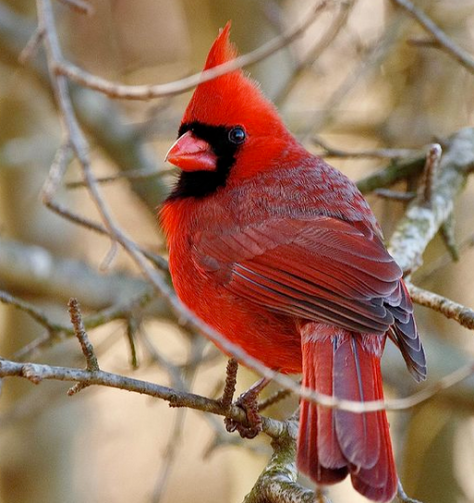
Arizona Cardinals – Northern Cardinal – Cardinalis cardinalis

The Cardinals come pretty close to actually using the full name of the animal, though their original name actually had nothing to do with the bird. Rather, the original Chicago Cardinals used old uniforms from the University of Chicago’s football team. These hand-me-downs were a faded red color, which the team owner rebranded as “Cardinal Red.” Eventually they made the full transition to the Northern Cardinal – the football equivalent of an Animorph.

The Northern Cardinal is the prototypical Cardinal. I mean, just look at the scientific name. You know you’re the quintessential example of a genus when they just repeat the Latin word twice. Tough look for the Vermillion Cardinal (Cardinalis phoenicius). I’m also happy to report that while the franchise has hopped around cities, moving from Chicago to St. Louis to Phoenix. all three cities host the real life birds.

Atlanta Falcons – Peregrine Falcon – Falco peregrinus

There are six species of falcons in the U.S. but only three have falcon in their name. Of these, only the Peregrine Falcon can be found in Georgia, so I think we can safely say that’s the intended namesake of the Dirty Birds. Not a bad mascot either, considering the Peregrine Falcon is the fastest animal in the world, reaching speeds over 200 miles per hour when dive-bombing prey. Fans of “My Side of the Mountain” may also recall the Peregrine Falcon named Frightful, the protagonist’s best friend and hunting buddy.

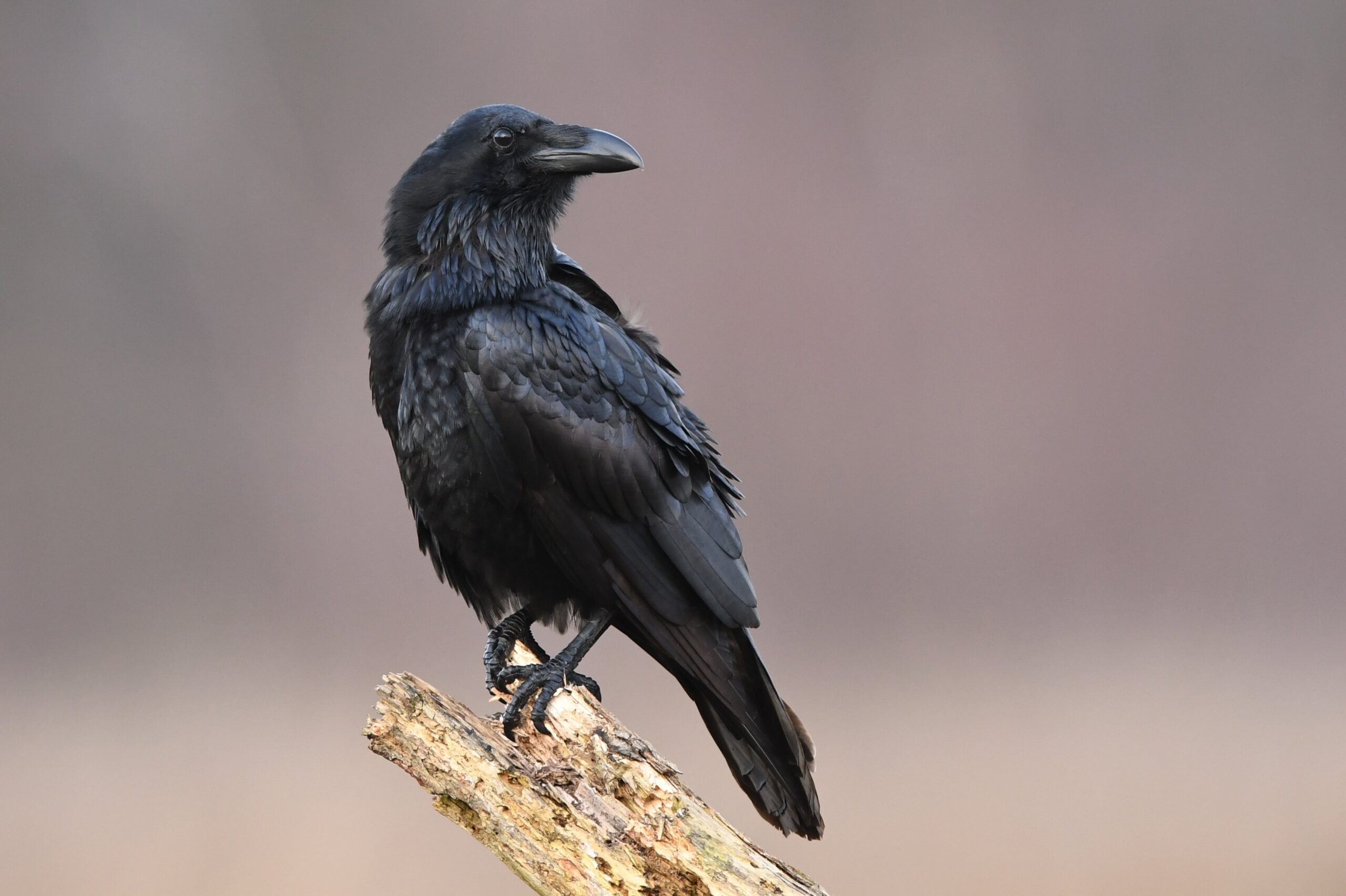
Baltimore Ravens – Common Raven – Corvus corax

There are technically two species of ravens in the US, but unless you’re in the Southwest, you can pretty safely assume you’re looking at a Common Raven. The Baltimore franchise is named in honor of Edgar Allan Poe’s poem of the same name, which apparently he wrote while living in Baltimore . While rare, one can still find a Common Raven in Baltimore, although it’s likely you’re just looking at a crow (hint, Ravens are bigger with thicker bills and wider tails).

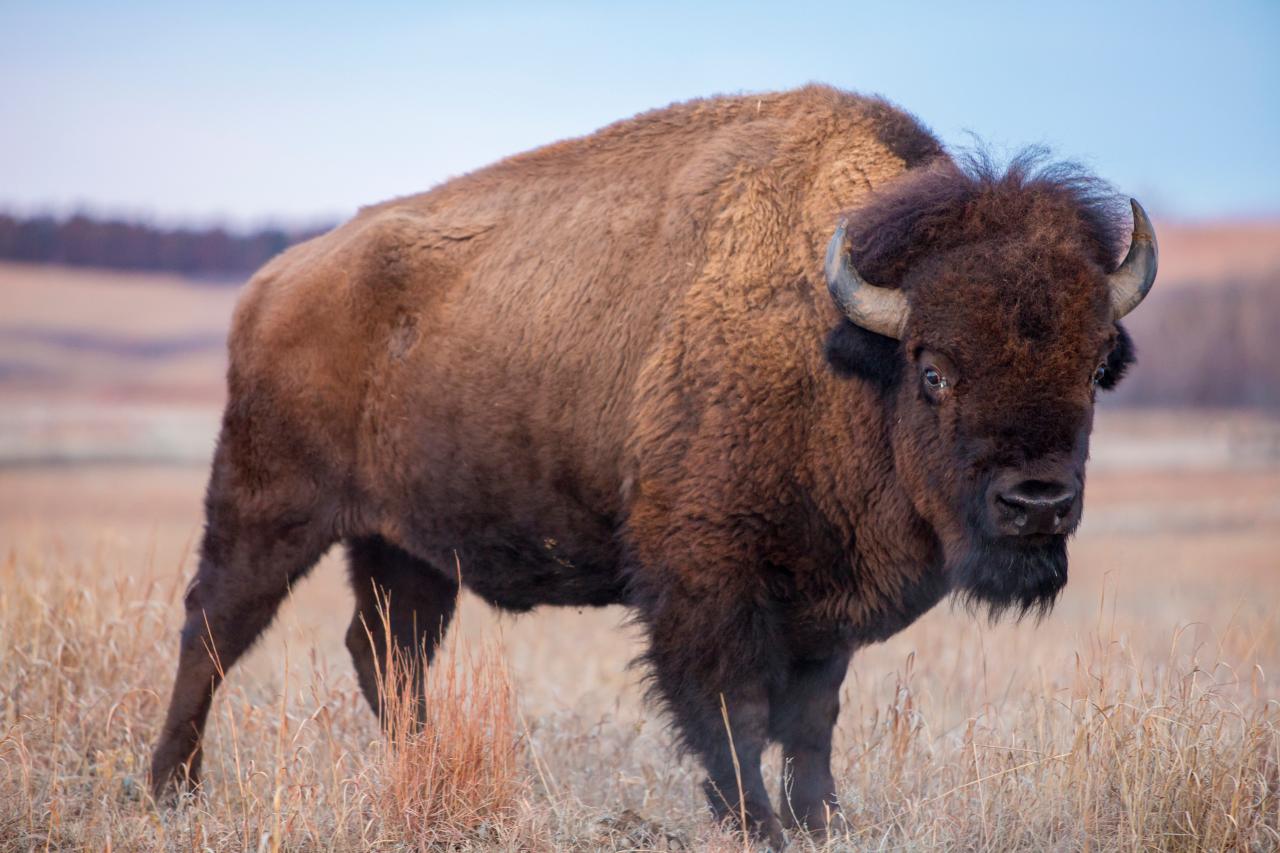
Buffalo Bills – American Bison – Bison bison

While it’s not quite settled history, it seems likely that the city of Buffalo was itself named for the American Bison, commonly known as the Buffalo. Well technically Buffalo was named after Buffalo Creek, but since Buffalo Creek got its name from the animal, I think we can bridge the gap here. In any event, the first professional football team in Buffalo was named the Bisons. This was eventually changed to the Bills, in part to honor frontiersman and noted animal-lover Buffalo Bill.

Similar to the Cardinal above, the Bison is an American staple that asserts full ownership over its genus. For a close up view of these beasts I’d suggest Yellowstone or Golden Gate Park, whichever you happen to be closer to.

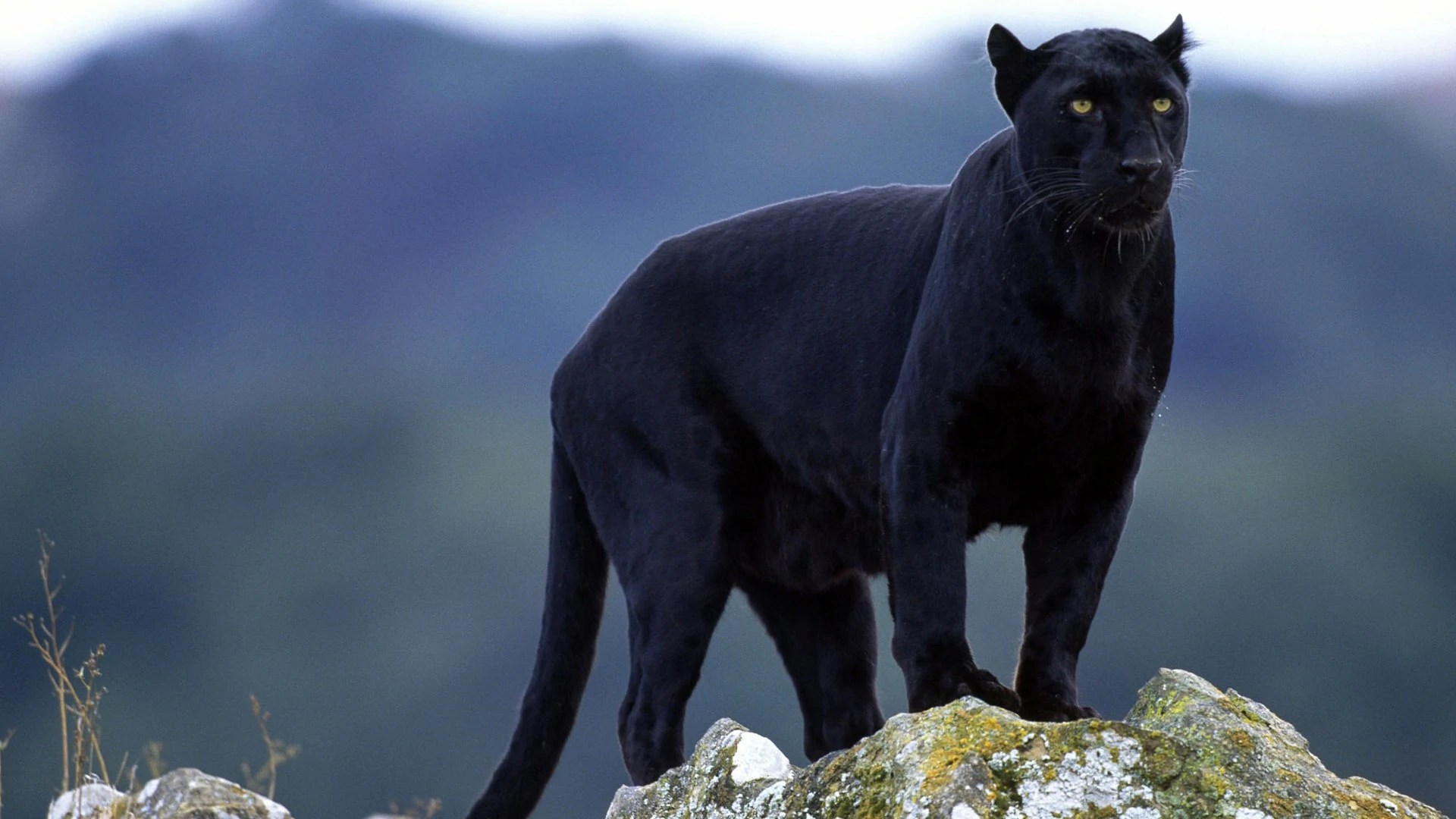
Carolina Panthers – Leopard – Panthera pardus

This one was tricky, so strap in. The owners picked the name since panthers are “strong, sleek and proud.” Then they backed into the colors of black, blue and silver to promote “synergy” between the name and uniforms.

Now, if someone tells you they saw a “panther” in the Southeastern US, the first thought would be that they are referring to the Florida Panther (Puma concolor cougar). This subspecies of the Mountain Lion (a.k.a. Puma, Catamount) is now only found in the Florida Everglades. It lends its name to the Florida Panthers, Miami’s professional hockey team.

But the Florida Panther is brown, and it’s clear from the Carolina Panthers’ logo, and from the backstory of their mascot Sir Purr, that the team is named for the “Black Panther.” Besides being a successful Marvel movie, Black Panther refers to melanistic color variations of the leopard and jaguar. (Melanistic is the opposite of albino, and doesn’t rise to the distinction of being its own subspecies). Given that a different NFL team already lays claim to jaguars, I think the melanistic Leopard is the safer bet here. I’ll take my Pulitzer now.

Chicago Bears – Grizzly Bear – Ursos arctos horribilis

Bears are pretty tough to pin down. This efficiently written article concludes that the Chicago Bears are based on the Grizzly. As I learned while “researching” this post, the Grizzly is actually a subspecies of the Brown Bear. Who knew? The fact that it’s a subspecies explains the use of three latin words for the Scientific name. It goes Genus (Ursos/Bear), Species (arctos/Brown) then Subspecies (horribilis/Grizzly). The grizzly’s subspecies name shows just how much fun the original settlers had with our continent’s megafauna.

One more fun fact: the Chicago Bears were partly named after the Chicago Cubs, which already called the Windy City home prior to the football team’s creation. The Bears’ owner reasoned that football players are bigger than baseball players, so the teams’ names should reflect that. Hence, the Bears.

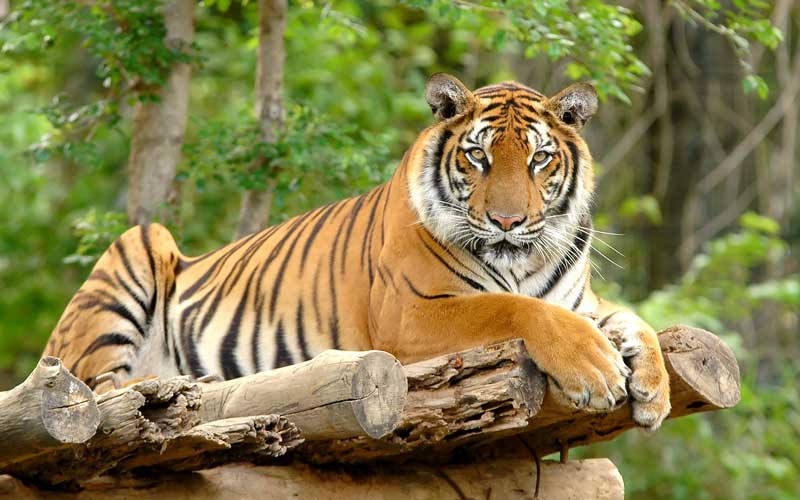
Cincinnati Bengals – Bengal Tiger – Panthera tigris tigris

Bengal Tiger refers to a specific subspecies of tiger, namely the one found in the Indian subcontinent. This is the default tiger subspecies, and is likely the one that Frosted Flakes drew Tony on. Not much more to say on the matter other than in a fight, the tiger would come in second to only the Grizzly on this list. Do with that what you will.

Detroit Lions – Lion – Panthera leo

No surprise here – there’s just one type of extant (non-extinct) lion species, so safe to say that’s where the Detroit Lions get their name. Lions used to range all throughout the Middle East, India and even Southern Europe. However our ancestors hunted them out of Europe about 500,000 years ago, which is still more recent than the Lions’ last trip to the Super Bowl.

Indianapolis Colts – Domestic Horse – Equus ferus caballus

The Colts were originally founded in Baltimore, and were named to honor the city’s race horse heritage. There’s only one species of horse still around, and while there’s over 300 breeds of domestic horse, they’re all technically the same subspecies. Meanwhile Przewalaski’s Horse, a donkey-looking thing found only in Mongolia, gets to be its own subspecies. Lucky guy.

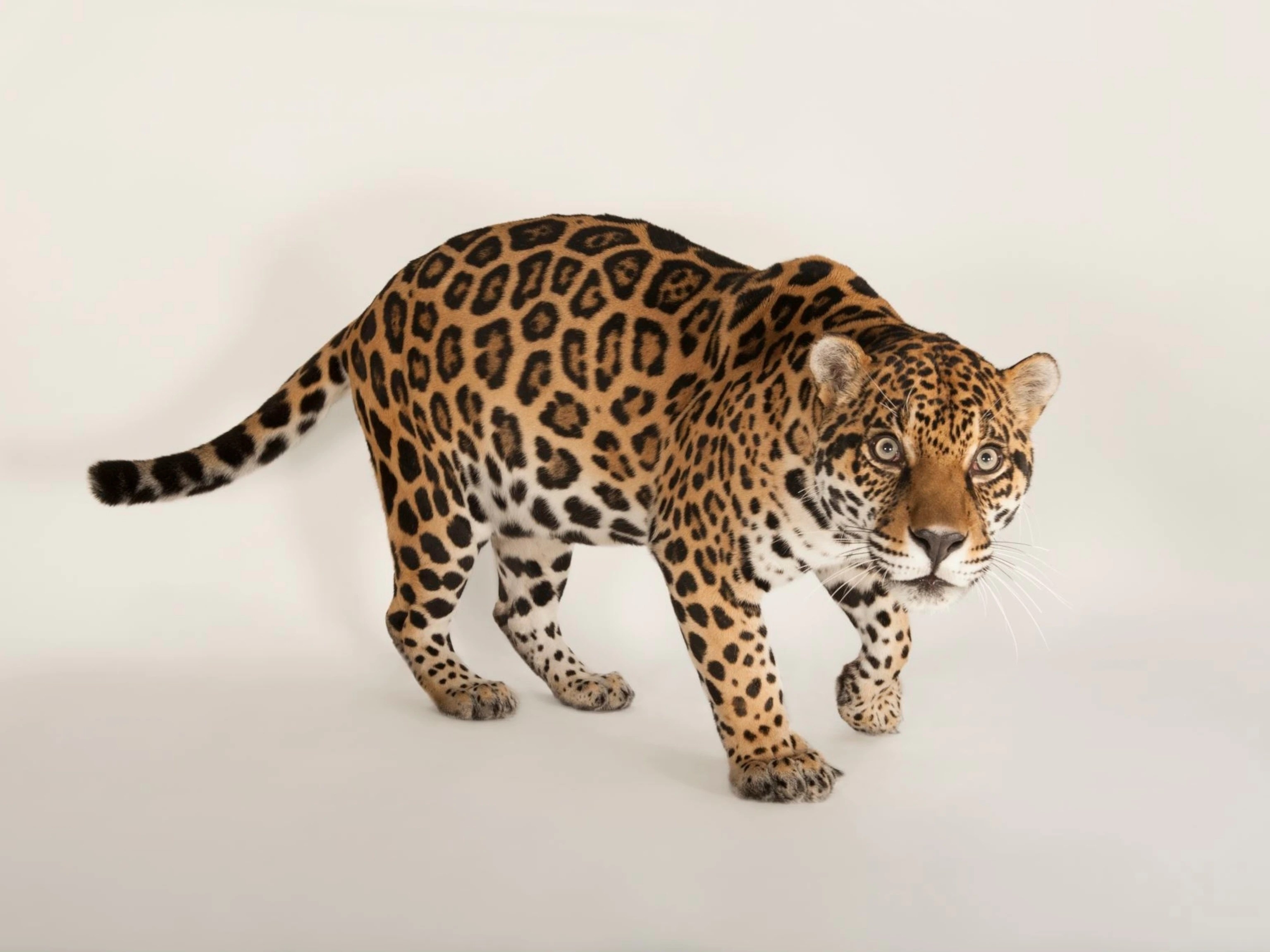
Jacksonville Jaguars – Jaguar – Panthera onca

The Jaguars joined the NFL the same year as the Carolina Panthers, and it warms my heart that both expansion teams were named after members of the Panthera genus. Jaguars are primarily found in Central and South America, although occasional cats are found in the Southern US.

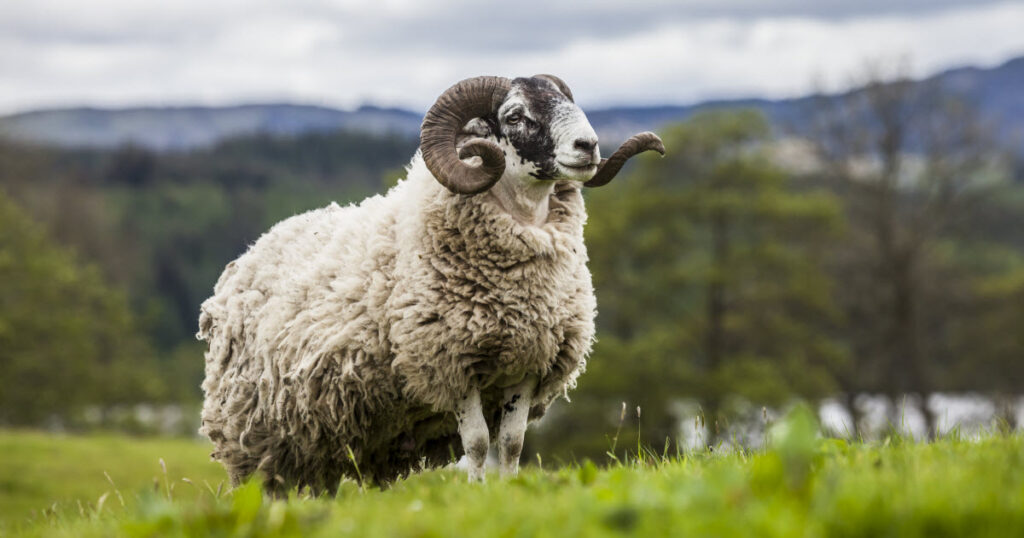
Los Angeles Rams – Domestic Sheep – Ovis aries

The Rams started play in Cleveland back in 1936. The owner named them in honor of his favorite college team, the Fordham Rams. Going back in time to Fordham’s name origin story, the students used to chant “One-Dam, Two-Dam, Three-Dam, Fordham” back in the 1890s. The Jesuit fathers who ran the school encouraged a change from Dam to Ram to avoid potential blasphemy. With the name change, the school adopted a Ram as the mascot and a live animal was brought to games. The first two of these mascots, named Rameses I and II, were “kidnapped by rival school and taken to a slaughterhouse.” And we thought Harvey Updyke was bad…

While there are other potential candidates for more impressive species, most notably the Bighorn Sheep found in the Western US, it’s pretty clear from the mascot history that the ram in question is just a male domestic sheep. So, it’s Ovis aries.

Miami Dolphins – Common Bottlenose Dolphin – Tursiops truncatus

While there are 40 species of dolphins out there, the Bottlenose is generally the first one that comes to mind. Interestingly (or not, depending on how much you’re vibing with the material in this post), there are actually two species in the Bottlenose genus. Wow! The more common one in US waters, and the one which Flipper was based on, is the Common Bottlenose Dolphin. Given it’s ubiquity and similarity to the logo, it’s safe to say this is the right species for Miami’s football team.

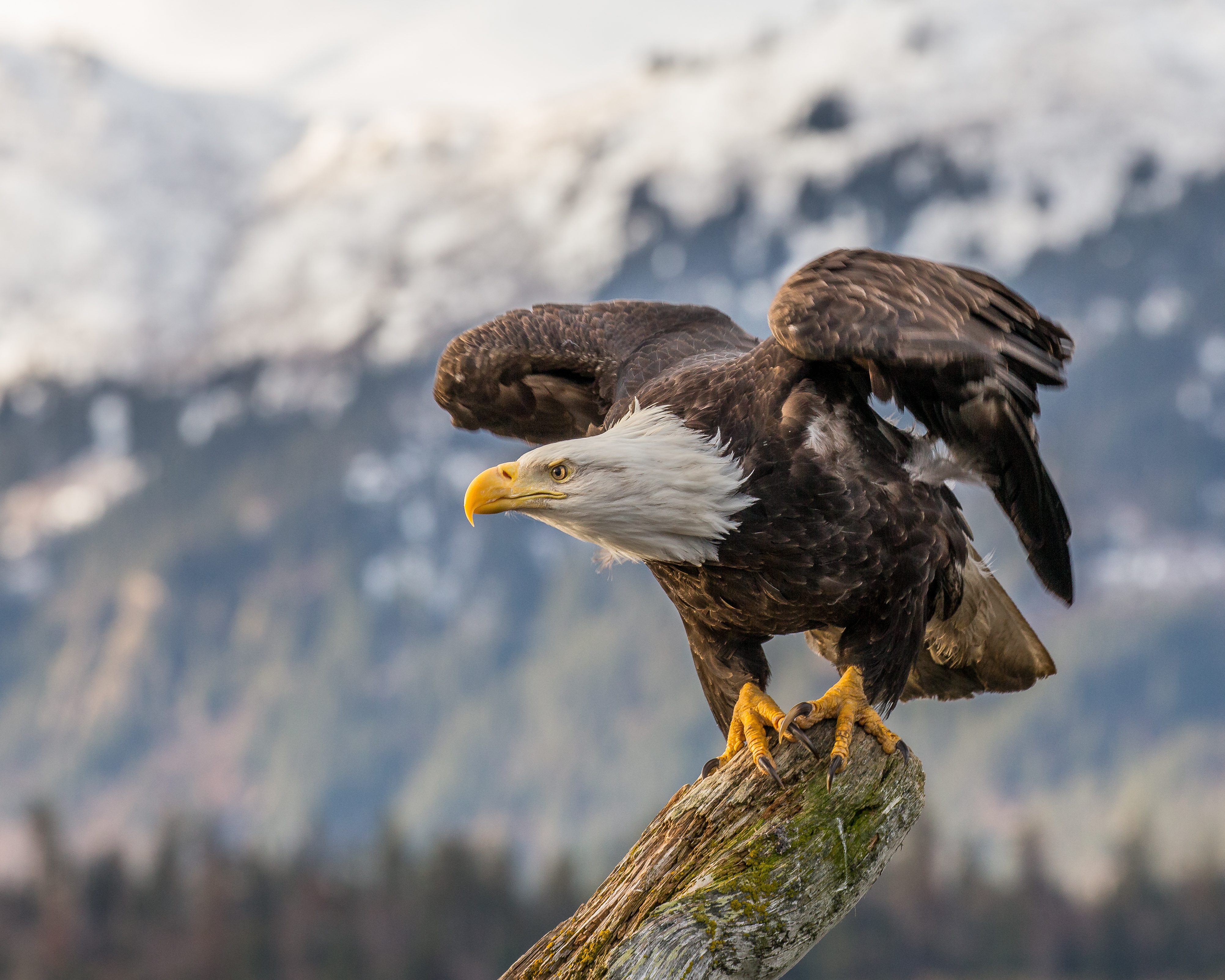
Philadelphia Eagles – Bald Eagle – Haliaeetus leucocephalus

Easy answer here thanks to Swoop, the Eagles’ costumed mascot. Swoop is a Bald Eagle, and that’s all the digging we need to do on this one.

Seattle Seahawks – Osprey – Pandion haliaetus

Osprey is the more common name for the Sea Hawk. Alliteration trumps ornithological precedent, so can’t really begrudge Seattle for going with Seahawks here. Really appreciate Seattle and Philly making it easy at the end here, because this took a lot longer to write than I thought it would.

Pokebirds: What is the bird equivalent of every Pokemon?

I’ve always loved animals, but I have Pokemon to thank for turning me into a birdwatcher. For those unfamiliar, Pokemon was a very popular game in the late 90’s, the point of which was to catch and train fictional wild animals/monsters. Most Pokemon could “evolve” into stronger versions of themselves, and some were so rare that they could only be found in a single place in the game. To beat the game you needed to collect all 150 Pokemon, hence the game’s tagline, “Gotta Catch ‘Em All.”

When I first came across a book on bird-watching (thanks Kepler’s!), my eleven year-old brain immediately made the connection to my favorite game. Birding’s purpose, besides the general enjoyment of nature and whatnot, is to find as many different species of birds as you can. It’s basically an animal scavenger hunt to be played with all 10,000 species of birds in the world, neat!

Pokemon transitioned into birdwatching for me, and with my free quaran-time, I decided to repeat the process and find each Pokemon’s bird equivalent. Now, a few notes before we dive in.

I’ve “only” matched birds with the original 150 Pokemon, from versions Red and Blue. In the twenty-plus years since these games originated, a dozen or so fresh installments of Pokemon have been released, each bringing with them new characters to catch (there are now 807). I’ve matched Pokemon and birds based on rarity, looks, cool factor and whatever other criteria I thought I could make stick. Not all Pokemon translate well into birds (I mean, Jynx?), but I was pleasantly surprised at how many of these matches seemed to click.

Second, since my birding journey began in the Bay Area, I’ve populated the list with mostly Californian birds, although many of these are also found nation-wide. A clever wrinkle of the original Pokemon Red and Blue games was that a few Pokemon were exclusive to only one version of the game. In order to obtain the missing critters and complete your collection, you needed to trade with a friend who had the other version. Since Pokemon Blue was my game of choice, I’ve made the “Red Exclusive” Pokemon into East Coast birds, which require traveling across the country in order to “collect.” For “Blue Exclusive” Pokemon, I went with West Coast endemics.

Lastly, I’ve ordered evolutions mostly by size, although in some cases I gave the rarer species higher ranking. I’ve included hyperlinks for each bird species which lead to the Cornell Lab of Ornithology’s excellent online field guide, appropriately titled “All About Birds.” There you can find further information on each species, including its calls, identification tips, and even where best to find them.

Now, it’s time to trade in your Pokedex for a lifelist…

The Tiers of a Sports Fan

Hey sports fans, 

Law school is back so free time is once again on the endangered species list; however I wanted to squeeze out a quick sports related post before I retreat into my hole for the semester. So here we go.

If you follow one sports team, you probably follow more than one. Realistically you probably have at least one preferred team in every major sport (the local team being the default choice). More often than not some of these teams will be doing well, while others will be doing poorly. So at any one point there will be lots of balls in the air, so to speak.

To determine your mood as a sports fan you need to weigh your relative attachment to each team individually. For example if you’re a big baseball fan from the Bay Area, a San Francisco Giants’ win is worth more to you than a win for the 49ers. We all do this balancing on some level, but I wanted to measure my allegiances to see just how much (or little) I care about certain teams. So what follows is a tiered ranking of the sports entities that I follow. (I prefer a tiered ranking to a strictly ordinal positioning, since the latter is often too subjective and involves the splitting of hairs that don’t really exist.)


Tier 1, In My Blood: San Francisco Giants, San Francisco 49ers, United States Men’s National Soccer Team

 The top tier is reserved for teams with which I share a deep, lasting bond. Lots of friends and family also care about these guys, so any success achieved is shared throughout my community. Any time these teams lose, the pain is undeniable. Conversely any and all victories reaffirm my faith in the world. If I had to put a 1A, it’d be the USMNT, mostly because winning the World Cup would be an immensely satisfying diplomatic victory. Sadly that’s about as likely as the Ivory-billed Woodpecker being found alive (i.e., it’s not happening).

Tier 2, Burning Passions: Liverpool FC, Golden State Warriors, Tiger Woods

The members of this tier are really, really fun to cheer for, and truth be told I spend more time watching their games then the teams in Tier 1 (also they play more often). Liverpool and Golden State are recent flings of mine that are developing into full-fledged romances, however both lack the pedigree of a childhood obsession that the top tier teams possess. Also I have fewer fellow fans to celebrate with, since Liverpool isn’t local and the Warriors haven’t been good for very long. Tiger gets a spot because watching him in contention on a Major Sunday is one of the most entertaining things in all of sports. His presence in a tournament single-handedly determines whether I’ll be watching four days of golf or doing pretty much anything else.

Tier 3, We Have History, but I’ll Distance Myself If I Have to: Florida Gators Football, Stanford Football, French Men’s National Soccer Team:

 Having two potential competitors on the same tier should be a no-no, but whatever, that’s just the case and we’ll survive. College football is one of my favorite sports but my undergrad institution thinks having a team would be bad for morale, so I’m a sailor without a ship. The Gators are the team of my youth and rank just slightly above the Cardinal in terms of my loyalty. However since I’m not truly engaged to either I can back away when the losses are too painful (I’m looking at you Rose Bowl). Similarly, Les Bleus (Team France) is a favorite of mine that is far enough removed from my everyday life to not cause me instant grief or joy.

Tier 4, Reserving A Spot On The Bandwagon: San Jose Sharks, San Jose Earthquakes, Duke Basketball, United States Women’s National Soccer Team

I like these teams, I want them to win, but I don’t need to follow their every move. Wake me up once we make the playoffs.

Tier 5, For Some Reason I Like You: The Buffalo Bills, Paris Saint-Germain, Napoli, English Men’s National Soccer Team

 If any of these guys are playing a neutral, I wish them well. Since pretty much every team they’re likely to play is a neutral to me, I guess you’d call me a fan.

 Bonus Tier, Teams I Love to Loathe: Los Angeles Dodgers, Miami Heat, Mexico Men’s National Soccer Team, Manchester United, Dallas Cowboys

Some of these are rivals of my loves, some are just showboating tools with crappy fans in fair-weather markets with more Sportscenter coverage than they deserve. A loss for one of these guys is roughly equivalent to a win for a tier 3 team.


Anyway those are the tiers, sorry for the rush job on this post. The actual contents of my tiers shouldn’t be incredibly interesting to any of you, but I found it a fun exercise as a sports fan, and I’d be curious to see what other people come up with for their own fandom pyramid. Also it would be interesting to assign numerical values to wins/losses for the different tiers so that at any given point you could calculate your precise happiness as a fan. But alas I have torts reading to do.

 All the best, see you at the end of the semester.

Gone but not forgotten: 3 extinct species you should know about

Hi everybody,

Happy boxing day! Did you guys all catch that Liverpool match this morning? No? Well that’s ok they lost anyway.

So with the holidays and a bit of free time on my hands I thought I’d provide some mediocre reading material for my (half) dozens of readers. In this post I’ll be bringing you a bit of information on three lovely animals which have sadly gone by the wayside. Unlike dinosaurs or saber-tooths or Megladons these critters weren’t knocked out of the game due to environmental changes or meteors or whatever. Rather these three were extinguished from God’s Green Earth by greedy humans like ourselves who failed to lay off the hunting and poaching in time. Instead, like the Giving Tree, we took and took until there was nothing left but material for a sad children’s book.

Why should I spend the holidays eulogizing bygone animals? Well, why do we fall? (So we can learn to pick ourselves up). Looking back on past environmental mistakes is a helpful and hopeful way of avoiding new ones. And if nothing else, extinct animal trivia is quite useful I’d imagine; it’s almost certainly been a jeopardy category at some point.

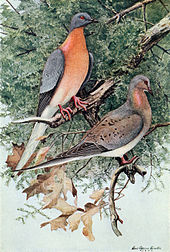
1. Passenger Pigeon (Ectopistes migratorius)

170px-Mershon's_The_Passenger_Pigeon_(frontispiece,_crop)

In 1800, there were as many as 5 billion Passenger Pigeons in North America, making it (probably) the most numerous species of bird on the continent. The birds would travel in giant flocks up to a mile wide and nest in enormous colonies numbering in the millions. Understandably, these large gatherings of pigeons were a popular source of food for both Native Americans and early colonists, However the colonists took this hunting to an extreme in the late 19th century when pigeon meat became an extremely popular way of providing food to the poor and enslaved. Hunters engaged in large scale reapings that including burning or cutting down the nest-filled trees and shooting anything that tried to escape. Because the birds traveled in large, tightly-packed flocks a single shotgun blast could easily take down 6 birds, according to Wikipedia. And since the pigeons were so numerous this mass birdicide was not seen as unsustainable (double negative). A few legislatures attempted to pass bills preventing the hunting of the birds but the general populace ignored the laws and the birds continued to drop like insect-birds (flies). 

Naturalist Paul R. Erlich noted that the Passenger Pigeon illustrates an important principle in conservational biology, namely that it isn’t always necessary to kill the last two members of a species to cause its extinction. Passenger Pigeons were gregarious birds that were used to breeding in gigantic colonies, so when these colonies fell from the millions to the thousand the reproduction rate dropped precipitously. Eventually there was only one Passenger Pigeon left. Her name was Martha and she passed away at the Cincinnati Zoo on September 1st, 1917 (the zoo now has a statue in her honor). The poor Passenger pigeon went from being the most popular bird in the States to getting hit by a metaphorical bus, except unlike Regina George this little guy never made it to prom. And now I don’t get to add it to my life list either.

2. “Thylacine” Tasmanian Tiger (Thylacinus cynocephalus)

300px-Thylacinus

The Tasmanian Tiger was like the Tasmanian Devil except a little bit cooler. The last of its kind (apex marsupial predators), this guy was once found throughout Australia, New Guinea, and Tasmania. Before British settlement of Australia it was pretty much only found on Tasmania, and by about 1900 that island was officially the land of its last stand.

In essence the Tasmanian Tiger was the Australian version of a coyote, except that this title probably belongs to the dingo. So it was more like the Tasmanian version of a coyote, with a pouch and stripes. This coyote-dingo-likeness was its downfall as Tasmanians were quite prejudicial to the beast. The locals thought of the tiger as a chicken and sheep stealer and placed bounties on the Thylacines. Like other apex predators, there were never a great deal of Tasmanian Tigers in the first place since local ecosystems only supported a few of them at a time. So once farmers were rewarded for gunning them down, the boys never stood much of a chance. The last known Tasmanian Tiger perished at Hobart Zoo on September 7th, 1936. Now September 7th is recognized in Australia as National Threatened Species Day, so that’s nice.

3. Baiji (Lipotes vexillifer)

Baiji1

The Baiji, also known as the Chinese River Dolphin, is probably gone now. The main reasons for this species’ bucket-kicking include pollution, damning of the river, and accidental capture in fishing nets. In 1950, there were approximately 5,000 of these lovely cetaceans in the Yangtze river. This number dropped to 300 by the 80’s, and an expedition up the river in the 90’s found a mere 13. A recent survey in 2006 turned up a whopping zero dolphins, and the species has been declared functionally extinct. While it is possible that a handful of Baiji are still swimming around in the Yangtze these individuals would not be enough to support a sustained population. In the immortal words of Ice Cube, don’t call it a comeback.

So that concludes my holiday list of ghost animals. Thankfully the environmental world is not all one of doom and gloom. Success stories do exist. Like the California Condor, which was once down to a mere 22 in 1987 and has now number over 430 birds (big thanks to the San Diego Zoo on that one). Also crows and ravens seem to be doing just fine. So there’s that. (Birding tip of the day: How do you tell a crow apart from a raven? The easiest way is to look at the tail. Crows have rectangular tails, while ravens was wedged tails. Next time you’re outside feel free to play “crow or raven?”, it’s more fun than it sounds).

Well I hope you all learned something. Have an awesome new year and remember to recycle any empty glass bottles you may find at your house/apartment come January 1st. Also take Michigan State +5.5 in the Rose Bowl. I still think Stanford will pull it out but it’ll be a close one.

League of Nations: Part II

Bienvenue to the second installment of the League of Nations. I hope you all were able to scrape some enjoyment out of the first sixteen teams because I’ve got another dozen and a half cities to share today. If you haven’t had a chance to check out the introduction/explanation to the League, please see the post prior (below) this one.

Before I unveil the “Asia” Conference, I’d like to reemphasize just how subjective this selection process really is. I’ve spent an embarrassingly long time on this already and still I find myself changing cities and rearranging divisions at the deadline. There aren’t any right answers, and the necessity of grouping the league has caused plenty of headaches. But it’s still been fun, and I’d love for any of you to chime in with suggestions. Eventually these franchises will need names, so if you’re bored and starting to daydream, maybe direct some creative thoughts my way.

Conference II: Asia 

Division A: TokyoSeoul, Beijing, Shanghai

Division B: Hong Kong, Taipei, Manila, Bangkok

Division C: Kuala Lumpur, Singapore, Jakarta, Sydney

Division D: Dhaka, Mumbai, Delhi, Karachi


The reasons why…

Tokyo is the largest city in the world, according to 5 of the 6 measures used by Wikipedia (thank you Jimmy Wales), losing out only in the measurement of ‘city proper’. There were no other contenders for the top spot in Japan, and while Osaka may be deserving of a nod (population nearly 20 million), this island nation is only getting one team into the League.

Seoul, assuming the region’s stability holds, should be an extremely productive member of the L.O.N. Thanks to the American military’s benevolent and ultimately successful intervention 60 years ago, South Korea has been able to grow into a vibrant economic powerhouse. And as the capital city, Seoul has become an indisputable member of the world’s elite cities, boasting a metropolitan population of 25 million and coming in at number 8 on the Global Cities Index. It’s a little tempting to also grant Pyongyang a team, given that they do have the world’s largest stadium (the May Day Stadium, capacity 150,000), and that Kim Jung-un would make a better owner than Chris Cohan.

Beijing gets a team, and they are required to play at the Bird’s Nest. Easy choice.

Shanghai. Remember when I said that Tokyo is considered the biggest city in all but one category? Well you’re looking at the city that beat them in the other category (city proper, in case you forgot). And honestly I’d say this is the most relatable measure for sizing up a city. For example, using ‘city proper’ we’d say that the population of San Francisco is approx. 800,000, whereas if we use some of the other measures (metropolitan area, urban area, etc.) the population jumps to as much as five million. For the purposes of sports teams these latter numbers are very important (think of how many people travel to Giants game from outlying areas), but if you are just trying to visualize how big a place is, you’re better off using ‘city proper’. Sorry for that undoubtedly boring rant, sometimes these things just slip out.

Hong Kong is an important city and seemed like an obvious choice. I don’t have much else to say about it, other than that the ‘Hong Kong King Kongs’ would be a cool name for the franchise.

Taipei‘s inclusion serves two purposes: giving China a fourth team (equal footing with the US) and representing the country of Taiwan. Either way the city has tremendous infrastructure, a large population, and a history of winning Little League World Series titles.

Manilla is the capital of the Philippines, and while Quezon City is technically the country’s largest city, both cities fall within the same metro area (conveniently called the Manila Metro). The Philippines contain approximately 100 million people, good enough for twelfth in the world, and surely you’d all agree they deserve a spot in the League.

Bangkok isn’t all cocaine, ladyboys, and face tattoos. It’s also where they filmed The Hangover 2 (ha-ha). In the league Thailand’s capital city will help to represent the approximately 610 million people of Southeast Asia. Also considered for this slot were Hanoi, Ho Chi Min City, and Phnom Penh, but Bangkok’s superior numbers and (projected, planned, possible) infrastructure wins out. Besides I’m sure opposing players will circle games in Bangkok with glee. If professional athletes can find trouble in Milwaukee, I’m sure Bangkok will produce some phenomenal headlines.

Kuala Lumpur might seem undeserving at first glance, but let me throw some stats at you and we’ll see if anything sticks. First off, KL is rated as an Alpha World City (same level as Los Angeles, Madrid, and Beijing). It has hosted the Commonwealth Games and Formula One Grand Prix. About 9 million tourists visit KL a year, making it the sixth most visited city in the world. FInally it should at the least provide some satisfying regional balance and serve as a possible alternative to any Southeast Asian fans who don’t like Bangkok.

Singapore is the only city-state in the League, which is a bit of a bummer, since city-states are awesome (just ask Ancient Greece). Singapore ranks 11th on the GCI, is the world’s fourth-leading financial center, and contains one of the five busiest ports in the world. Oh and did I mention it’s a city-state?

Jakarta. Here’s a ‘fun’ trivia question: What’s the biggest (population-wise) Muslim country in the world? With a population of 237 million, about 90% of which practice Islam, the answer is Indonesia! Isn’t learning fun? Anyway Jakarta is the capital of this archipelago and holds nearly 30 million people within its metro area. Whatever sport the League chooses to adopt (my personal choice would be a reincarnation of Slamball) I’m hoping that the sheer mass of people in the area will lead to a sizable following. Also the main island of Indonesia, called Java, is the world’s most populated island (138 million). The more you know…

Sydney is swell. According to the GCI, it is the world’s 12th most powerful city, and the 2000 Olympics showed that the city is comfortable hosting the world. While Sydney was an obvious choice, I did sadly have to leave out both Melbourne and Auckland. Melbourne is Australia’s second city (the Boston to Sydney’s Big Apple) and impressively hosted the 1956 Olympics. However Australia’s modest population doesn’t warrant two teams in a worldwide league, and for the same reason I had to leave out Auckland, (New Zealand has 4 million people, about the same as South Carolina), despite the City of Sail’s impressive growth.

Dhaka is one of the world’s megacities (defined as having a population of 20 million or more) but most people have never heard of it, myself included. It’s the capital of Bangladesh, a country the approximate size of New York State with a population of 150 million, making it the most densely populated nation in the world. According to Forbes, Dhaka is one of the fastest growing cities in the world, with a population increase of 45% between 2000 and 2010. Hopefully this franchise will be able to capitalize on the explosive growth of the city, and Dhaka will be a household name in the future. Oh, and it’s known as the “city of rickshaws”, another great potential franchise name.

Mumbai, or Bombay, is the largest city in India and the fourth-largest in the world. Interestingly, the city originally consisted of seven separate islands, which were connected over the course of 500 years by different land reclamation projects. Pretty neat.

Delhi is technically a metropolitan area, while New Delhi is the actual capital city of India; for our purposes ‘Delhi’ will suffice. It’s also a megacity, and gives the second largest country in the world a second team. Narrowly left out is Kolkata (Calcutta for your British Imperialists), India’s third largest city. Rather than adding a third team to India I chose to include Dhaka, thereby hopefully including Bangladesh’s immense population. However if the League of Nation ever does expand (and frankly how could it not?) then Kolkata will be among the first cities granted an expansion team.

Karachi: Pakistan’s largest city, and according to Forbes (same article as before), the world’s fastest growing city. It’s the economic and educational center of Pakistan and its inclusion in the same division as India’s two teams should make for some explosive rivalries.

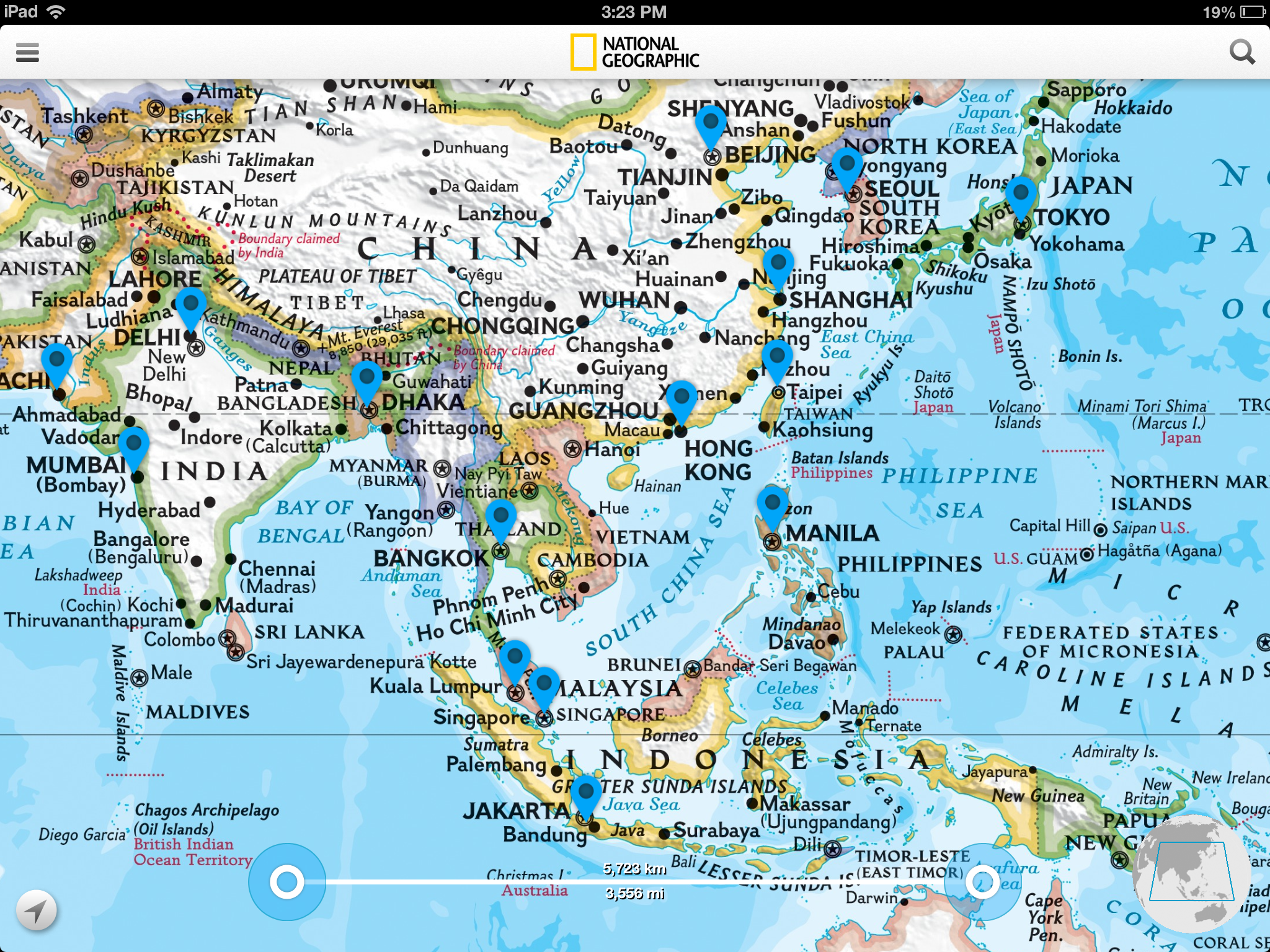
That’s it for this edition of the League, please see below for a map of the teams (without Sydney, but I’ll bet you all know where that is). Next time I’ll be introducing the Middle East/African/Eastern Europe Conference. Hopefully I’ll have thought of a better name for it by then.

Asia

The League of Nations

Hello and welcome back to Sports and Animals, so sorry to keep you all (the glorious half dozen of you) waiting.

As you may have surmised by now I made it back safe and sound from the Southern Hemisphere. I’d like to thank all of the interesting people I met down there, but to be fair their company is to blame for the lack of updates to this site. I had anticipated being alone for long stretches of my trip, and therefore having a lot of time to think, write, edit, etcetera. However backpackers are a friendly bunch (I’d like to think this includes myself) and rather than type away on my ipad I found myself learning Dutch jokes, discussing ‘footy’, and drinking Goon. Entries were left half-finished, cities unchronicled, photos never posted. Oh well, I’m back now and with nothing but time between me and a date with Duke Law, I figured I’d catch up.

To reward your collective patience, I would like to share something I hope you’ll find more interesting than my reflections on Australia; which by the way, was awesome. What follows below is a pet project I’m referring to as the League of Nations – a working title – that I spent some long bus rides brainstorming. Here goes…

It began with an article I once read (and now can’t find) discussing the NBA’s possible expansion to Europe. It’s no secret that US leagues are eager to increase their audience, and the NBA has been playing exhibition games in London for years now, with the thought that one day an expansion team may be based across the pond. However this article pointed out that for travel reasons the NBA would need to stick an entire division of teams in Europe at once, rather than have one isolated franchise attempt to survive on its own. This division would (most likely) consist of teams in five cities: London, Paris, Madrid, Barcelona, and Rome. The interesting aspect of this – to me at least – is how those five cities were chosen among all possible candidates. To be fair those five seem rather obvious choices, but who is to say that Berlin isn’t better than Rome, or whether Spain really needs two teams. The next logical step was to see how an expansion to the rest of the world would play out.

The result is the League of Nations, a hypothetical (duh) 64 team worldwide league to be formed at a later date for a yet undetermined sport. The league is broken into four conferences with 16 teams each, and within each conference are four divisions holding four teams. It’s like two NFLs smushed together, if that helps you with the visual. The main criteria for selection included size (both of the city and country), regional balance, and an effort to avoid geographical overlapping. Infrastructure, Olympic history, the Global Cities Index, and regional balance were also considered.

Hopefully this long and garbled introduction hasn’t turned you off to the idea, because I think the concept is pretty neat even if I’m not the best to execute it. I’ll be “releasing” the league in four parts, starting today with the “Americas” conference. I’ve included some basic reasons as to why certain cities were chosen (or left out) and I’d be happy to hear your thoughts. Please try to keep in mind – as I had to myself – that a worldwide league will never be able to satisfy all of our provincial wants, even if 64 teams does sound like a large number; the world is a big place. Hope you enjoy.

CONFERENCE I: The Americas 

Division A: Vancouver, Los Angeles, Chicago, Mexico City

Division B: Toronto, New York City, Atlanta, Havana

Division C: San Jose, Bogotá, Caracas, Lima

Division D: Rio De Janeiro, Sâo Paulo, Buenos Aries, Santiago

The Reasons why…

Vancouver recently hosted the 2010 Winter Olympics and is an up and coming Canadian city, picked here to represent the Pacific Northwest. It won out over Seattle in my effort to avoid picking too many US teams. (For those curious, the original iteration of the league featured eight American-based teams, now trimmed to four).

Los Angeles is huge, uber-relevant globally (ranked #6 on the AT Kearney Global Cities Index), and tremendously shallow. Sadly I had to go with the home of Hollywood at the expense of beautiful San Francisco, since I wasn’t willing to stick two teams so close together without a deeper division existing between the potential fan bases. For example Barcelona and Madrid get two unique teams (as you’ll see later) because the people of these cities hate each other and fought a war relatively recently. As much as the NorCal v. SoCal rivalry matters to college freshman and baseball fans, it wouldn’t necessarily preclude residents of the Bay Area from supporting a team a little farther south in lieu of their own, nonexistent franchise. Also LA hosted the 1984 Olympics.

Chicago is any easy choice to represent the midwest. With a population of 10 million and a GCI (Global Cities Index) ranking of seven, the windy city deserves its spot. A passionate tradition of sports fans didn’t hurt either, and minor challenges from Detroit and St. Louis were shrugged off.

Mexico City‘s metropolitan area contains over 20 million people, and the city is unquestionably the center of all things Mexican. Another easy choice.

Toronto is the second representative of Canada, and is the highest ranking Canuck city according to the GBI (coming in at an impressive 16th). Quebec made a push on behalf of French-Candiens, but their voices were not heard and the home of the CN Tower shall receive the spot in the L.O.N.

New York City is number 1 overall in the GBI, and is one of just two cities (along with London) given an Alpha++ Global city ranking. By the way, if you find any of these rankings interesting (and who knows maybe you do) you can find them by going to https://en.wikipedia.org/wiki/Global_city

Atlanta is potentially the most controversial of the US teams to be selected. Truth is I had room for one more American franchise, and Atlanta checked the most boxes without repeating geographically. Boston is too close to New York, Washington DC has other things to do besides host a franchise (the Redskins play in Maryland) and Miami’s demographics are covered by Havana’s team. Meanwhile Atlanta is a large city (metropolitan area includes approx. 5 million souls), played host to the 1996 Olympics, and stands as the de facto capital of the American South, despite Sherman’s best efforts.

Havana is probably wishful thinking on my part, but this is a forward-thinking league. I also thought it was a sexier choice than Miami, being that it gets the L.O.N. footprint into one more country. There might be some worries about Havana players bolting their hotel rooms after away games, but I’ll set that issue aside for someone else to deal with.

San Jose was chosen to represent Central America. Frankly I don’t have strong facts to back up all of my selections, so I’ll just say that I was happy with the way San Jose’s marker looks on the map. Also I’ve been hearing great things about Costa Rica (you probably have as well) so I figured they deserved a little something for all their hospitality.

Bogotá is the capital of Columbia, ranks 55th on the GCI, and holds nearly 8 million people within its borders. Columbia as a country holds nearly 50 million people, and I’d like to think they’ll all get behind this team. And because I gave Columbia a squad I had to include their rivals and neighbors Venezuela one as well.

Caracas is Venezuela’s capital, ranks 57th on the GCI, and has a population of approximately 3 million. They also have oil.

Lima has nearly 9 million residents and is the capital of Peru. As you can see I’m not exactly an expert on South America, and these picks sort of made themselves. That doesn’t mean they’re wrong, just relatively uneducated choices. Judge for yourselves.

Rio de Janeiro, assuming it survives the massive amounts of tear gas currently in its atmosphere, will host the 2014 World Cup, 2016 Olympics, and potentially the 2020 World’s Fair. It is in every sense (besides public transportation) a global city, and its widespread (but trending downwards? hopefully…) crime and poverty don’t stand to make it any less so.

Sâo Paulo is Brazil’s second city on the list, and was originally overlooked by me. Rio may get all the headlines, but Sao Paulo is in fact Brazil’s largest city with a metro area of 20 million. Furthermore it ranks an impressive 33rd on the CGI, while poor Rio doesn’t even make the list.

Buenos Aires: another no brainer. Besides being the home of Johnny Rico and friends in Starship Troopers (and getting wiped out by a bug-directed meteor attack) B.A. is the highest-ranked South American city on the GCI, coming in at number 22. Its city limits and suburbs hold 12 of the 40 million people in Argentina, and its fans will look forward to matches against the two Brazilian sides next door.

Santiago has over 5 million residents, a full third of Chile’s population. It’s home to the Metro de Santiago, South America’s most extensive metro system, and really seems to be going places. Montevideo was a tempting choice, but sadly Uruguay and it’s measly 3 million inhabitants didn’t qualify for a team.

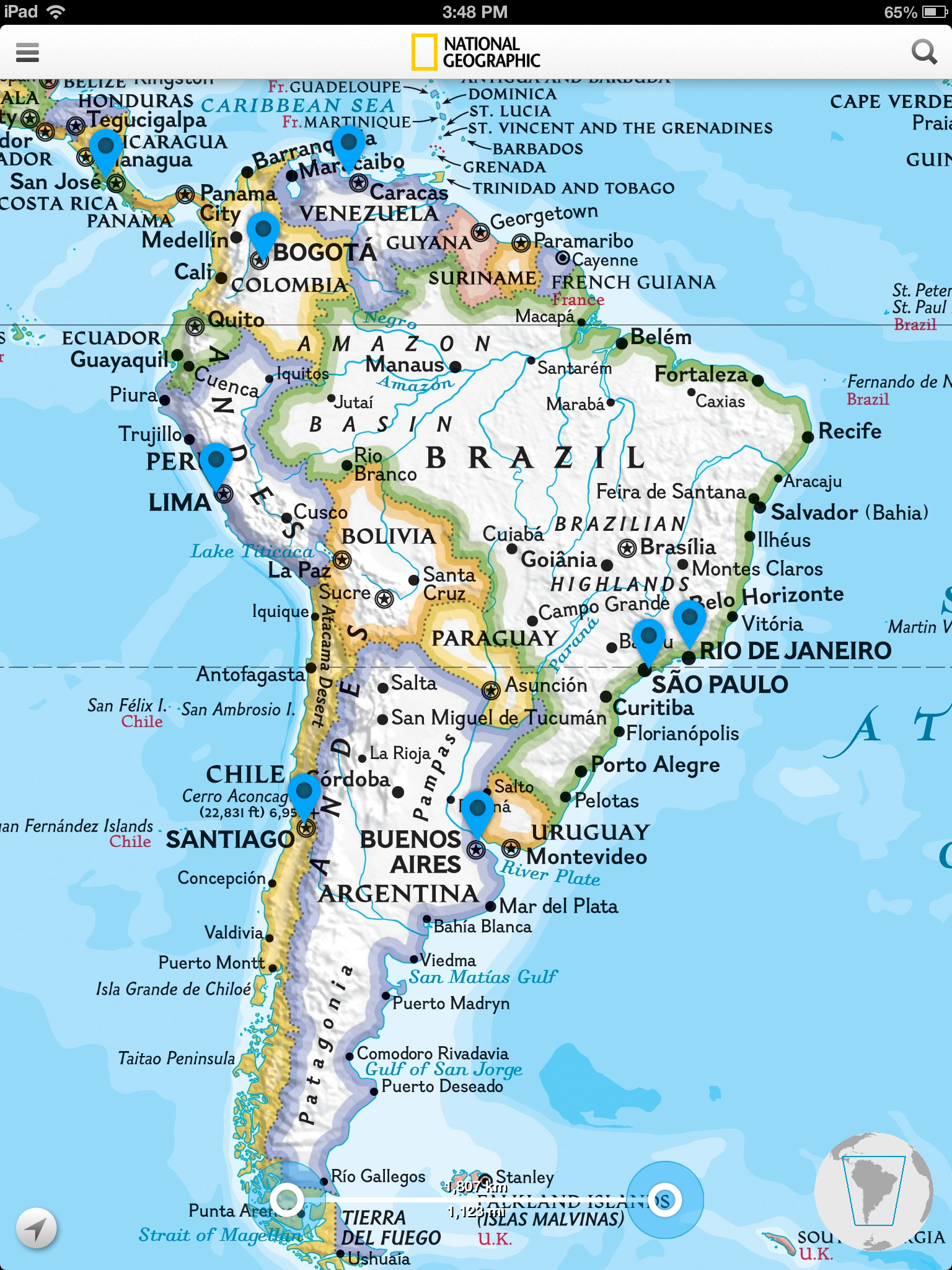
Anyway that’s a full quarter of the League of Nations, just as Wilson imagined it I’m sure. You can see the cities pinned on the maps below (click to enlarge). I’ll do by best to get the next segments up in a timely manner. Glad to be back.

North America LON South America LON


Somewhere on the South Island

Catching Up

Well it’s been a bit longer between posts than I planned, and I apologize for the delay. Not sure if anyone out there is really chomping at the bit for updates, but just in case you are, I’d hate to keep you waiting.
Anyway, I’m happy and (relatively) healthy down here on New Zealand’s South Island. One of the reasons I’ve fallen behind on my writing is that there is a lot to do down here and I’m trying to fit in as much of it as I can. And to be honest when I’m not hiking or bungy jumping or drinking with foreigners, I’m usually too tired to do much beside sleep and stare off into space. But today I’m catching up, sitting cross-legged and cramped on a bus that smells like stale beer and reverberates with dubstep, surrounded by friends speaking Dutch and German and heavily accented English, as snow-capped peaks and the occasional waterfall fly by the windows and I don’t really notice because New Zealand has way too many mountains and waterfalls.
Last I wrote I was resting in Taupo, recovering from a long night of two-for-one drink specials. Since then I’ve spent nights in Whakahoro, Tongariro National Park, Wellington, Abel Tasman National Park, Blackball, Franz Joseph, Wanaka, Queenstown, and Milford Sound. Tonight it’s Invercargill, one of NZ’s southernmost cities, then back to Queenstown for some further sampling of the Kiwi nightlife. Below are the spark notes of my last two weeks.
We’ve been a bit unlucky with weather, and unfortunately missed out on the Tongariro Crossing (home to Mount Doom and one of the best hikes in the world) due to 100km/hr winds on the mountain. It was still pouring rain when we got into Wellington, but I loved that city anyway. Wellington has the awesome, and most importantly completely free, Te Papa Natural History Museum. It also has great bars, a lively music scene, and is home to Peter Jackson’s film studios.
Skipping to the South Island, which is a three hour ferry ride from Wellington, we were greeted with more rain. Our first stop was Abel Tasman National Park, where I fell in with five busmates and we went for a two day, one night, 40 kilometer (25 miles) hike. The park is gorgeous, filled with lush rain forests covered in ferns, estuaries that can only be crossed during the appropriate low tide, and more pristine beaches than any one traveler could be bothered to stop at. However all of this natural beauty was somewhat mitigated by the fact that I was marching 7 hours a day with a heavy backpack and eating Spaghettios for every meal. Upon reflection I’ve determined that the outdoors is nice, but I’m a city-slicker at heart.
In Franz Joseph we took a helicopter ride and hiked around New Zealand’s largest glacier. Blackball is an old mining town with nothing really going for it. Wanaka is the diet version of Queenstown, and Queenstown is its own analogy altogether; I’ll have to devote an entire post to its everlasting glory. MIlford Sound would almost certainly have been off the charts beautiful if the weather hadn’t been so atrocious. Invercargill has been described affectionately by others as “the asshole of New Zealand” so I’m not getting my hopes up for tonight. Either way I can’t complain since it’s back to Queenstown tomorrow night, and that is a known commodity for which all the hype has been fulfilled.
I’ll be sure to write more often now that I plan on settling in for a bit, and put down some roots here on the South Island. I hope that everyone at home is enjoying the summer weather. Also please appreciate hot showers, dishwashers, and not sleeping in a bunk bed every night. And go Dubs.

Editor’s note: Wrote this a few days ago but only got around to posting it now. Right now I’m back in Queenstown watching the Warriors try to hold on in game two against the Spurs. The game isn’t on tv here so the bartender (I’m at a sports bar, drinking delicious cider) is streaming the game for me on his laptop. It’s the choppiest thing I’ve ever seen, and yet it’s so beautiful that I want to commission an artist to paint the scene for me. Just went final, Dubs win, looking forward to game 3 (which will be on ESPN, thank The Lord).

20130509-164327.jpg

20130509-164349.jpg

20130509-164408.jpg

On the Road Again

I’d like to preface this entry with the disclaimer that I am exhausted and a bit green about the gills, so if the writing that follows is particularly atrocious I’ll have to chalk it up to that. Bad days follow good nights, as the saying goes, and I think my body is trying to put the kibosh on anymore shenanigans in the near term. It’s just as well that I’ve decided to take a quick interlude from my mad dash around the country and spend a few nights here in Taupo, home to New Zealand’s largest lake (approximately the size of Singapore).

When I last wrote I was returning to Auckland after my working holiday in the Bay of Islands. The City of Sails was a lot more fun the second time around, in part because on this visit I stayed in a centrally located hostel just off of Queen Street, a few minutes’ walk from the harbor. I did most of the regular touristy stuff: visited the Sky Tower, walked along the Viaduct, window-shopping etc. Then on Wednesday I boarded the Stray Bus, a hop on hop off transportation service for backpackers, and left Auckland for the Coromandel Peninsula.

The Coromandel is beautiful; equal parts lush native forests and white sandy beaches. It is apparently known as New Zealand’s version of Thailand, and is also infamous for it’s burgeoning cannabis industry (the dense vegetation makes crops difficult to spot from the air). Our group stayed in the tiny, tiny little town of Hahei, which was mostly deserted on account of it being the off season. Hahei was quite pleasant and most of us did a few hour hike to the gorgeous Cathedral Cove, which I’ve catalogued in some of the photos down below. Outside of the shoreline however there wasn’t much to explore in Hahei, and our group was happy to leave the next morning for Raglan.

Raglan is known as the surf capital of New Zealand, and features the world’s longest left hand break (whatever that is). Just like in Hahei the Stray bus took us to a remote hostel that felt a lot like summer camp, and also just like in Hahei there wasn’t much to do besides go for a walk along the beach. Not that I’m complaining mind you; the weather was amazing and watching the sun set over the ocean was one of the highlights of my travels so far. Still it’s fairly exciting to return to modern trappings, and today I’ve been bingeing on the internet like a true neckbeard (google it).

The next day we drove to Waitomo, home to an extensive cave network. Here most of the group and I went on a spelunking tour, replete with abseiling, rock climbing, and a whole lot of crawling. The tour lasted three hours, took us about 75 meters underground, and was utterly exhausting. Any claustrophobia I may have harbored is long gone, thanks to some of the tiny crawlspaces I made it through. Also the caves are pretty well known for their glow worms (Arachnocampa Luminosa) and we saw a few along the way.

That night we stayed in a Maori mourea, which is a large meeting house that looks a bit like an oversized log cabin, but filled with intricate wooden carvings and pictures of the tribe’s deceased members. The evening was part of Stray’s cultural immersion program, and despite my initial skepticism (these things usually feel a bit forced) I really enjoyed the experience. Our group learned (and performed) the Haka, ate a fantastic Maori meal, and listened to some pretty fascinating stories. The family who runs the mourea couldn’t have been more welcoming and after spending ten minutes with them it felt as if we’d known them our whole lives. It was sad to leave, but everyone was also a bit relieved to not have to share one giant room anymore.

The next morning featured a day stop in Rotorua, the most active geothermal city in the world. The whole place reeks of sulfur, but was great for a quick visit. Again, photos below. Sadly about a third of our group chose to stay in Rotorua, as it is the closest place from which to visit Hobbiton. And then today I decided to get off here in Taupo, and had to say goodbye to the rest of my bus, at least temporarily. Lots of us get off along the way, so with any luck I’ll be encountering the scattered remains of our cohort around the South Island.

While I’m on the topic, I’ve got to say that this has been one of the things I’ve found hardest about traveling: the constant making and losing of friends. I’m no longer worried that I’ll be left completely friendless, as I’ve now been on the road long enough to know that new buddies often lie just around the corner. But the individual relationships that form in a matter of days are still painful to part with. These are guys and gals who, though we’d only spent a few days and nights together, felt like long lost cousins I was glad to have found. Then there is the family I stayed with in Paihia, my fellow workers at the Saltwater Lodge, and even hostel roommates who I only knew for a couple of hours. It’s always a bit heavy to say goodbye forever, and even with the requisite facebook contact you know you’re likely to never see them in person again. Anyway I guess it’s a price to be paid for being untethered, and hopefully I’ll see most of my comrades somewhere down the line.

So as not to end on too sad of a note, I’ll throw in some fun facts I’ve gathered along the way. The common Kiwi slang I’ve picked up include mate (obviously), sweet-as (as in, “sweet as pie”, and chilly bin (a cooler). I’m also using a lot of Britishisms such as heaps, rubbish, and cheeky. Apparently one in four people in Hamilton, NZ have chlamydia, and there is an area of teh downtown known as the Chlamydia Triangle. My lifelist is now up to a whopping (not really) 210. My time on the Waitaingi River taught me about a few dozen species, and now I’m something of a North Island shorebird expert. Don’t act like you’re not impressed…

As always I’d like to give my best to everyone at home and I hope you’re all enjoying the Giants’ nice start. I listened to some KNBR this morning (via my ipad) and I’m prouder than ever to wear my SF cap everywhere I go. My wifi situation isn’t entirely reliable as a lot of Stray stops are pseudo camp sites, so pease forgive me if I’m unable to reply to your emails for a few days. Our next stop is Tongariro National Park.

Best,

James

20130414-224015.jpg

20130414-224039.jpg

20130414-224110.jpg

20130414-224123.jpg

20130414-224201.jpg

20130414-224216.jpg

20130414-224235.jpg

20130414-224258.jpg

A Temporary Local

Writing is a funny thing, and recently I’ve been focused on the differences between scripting by hand (the case for my personal journal) and typing away at a keyboard (for my blog and family/friend emails).
When scrawling across a notebook’s page I’m confident that my story isn’t getting buried in revisions. There is no backtracking, since I write in pen and my OCD tendencies won’t allow me to cross anything out, and as such the words seem to throw themselves down on the page before I have the chance to think better of it. It’s like the writing section on standardized tests, where the panic of a ticking clock forces me (and everyone else, I think) to write first and determine quality later. The result is often a solid, better than expected but not exactly amazing product, one that might land in the B range if given a proper grading.
Typing, on the other hand contains within it the potential for greatness and the possibility of rubbish. Because we have the ability to add text, delete sentences, change words, etc. we occasionally lose track of what we set out to say in the first place. Even now I’m wondering whether any of this is at all interesting, or pertinent, or coherent. Anyway, it’s another excuse should this blog (still hate the word) entries turn out to be suboptimal. It’s the keyboard’s fault for giving me just enough editorial rope to hang myself. Moving along…

I’ve left Paihia after 16 nights, and it’s been an amazing experience. Scratch that, it’s been a great and enlightening two weeks, but “amazing experience” is clichéd garbage and I won’t use it in my writing. Or rather, I will use it but then try to backtrack right afterwards (see above for example).
Anyway I’ve stayed in the Bay of Islands for these two weeks rent free thanks to Workaway. For the uninitiated, Workaway is a program/website that matches hosts with travelers. The traveler (that’s me!) performs a few hours worth of work a day in exchange for free room and occasionally board (I think board means food). It’s similar to WWOOFing (Willing Workers on Organic Farms) but is expanded to include housework, childcare, technical assistance, you name it. It’s a great way to save some money, earn yourself a host family, and worm your way into the fabric of your new home.

So for my first week in Paihia I stayed and worked in a hostel, the Saltwater Lodge. It’s a really nice place, kept very tidy by myself and the other 5 or so workers who clean the rooms every morning. It’s a stone’s throw from the beach and adjacent to the only two backpacker bars in town, and during my time in the Bay of Islands it’s been home.
Now in trying to explain just what it’s like to call a hostel a home I’ve stumbled upon the analogy of a coral reef; please bear with me.
The other workers and I are clown fish (think Nemo) who spend all their time amongst the anemones and whatnot, so we are the regulars. Our average stay is around two weeks, which is more than enough time to fully explore the little beach town we find ourselves in and feel like a know-it-all.
Every weekend (I’ve spent three here) brings in a new school of fish, or student group. The first time it was Danish students, the second it was an Auckland all boys high school, and this final weekend it’s kids from Denmark again. These “schools” are generally noisy, messy, and as far as the workers are concerned, practically homogenous. Their arrival is marked with a collective groan from the workers, because their eventual departure is certain to include an inordinate amount of bed making, dishwashing, floor sweeping, litter removal, fridge cleaning and toilet scrubbing.
Apart from the schools and the regulars you find the occasional visitors, like a parrot fish or grouper that finds its way from the wilds of the open ocean to the safety of the reef. These “visitors” are solo backpackers who often join the worker nucleus for the duration of their stay and usually bring some funny stories to the table. Moreover these quick friendships can be great motivation for seizing the moment and pushing us clown fish to go out, because it seems to always be someone’s “last night in town”.
Finally you have the owners and managers of the hostel, who we’ll call sharks. Sharks are infrequent visitors (at least during social hours) but their presence is often enough to drop the room temperature a few degrees (Celsius, of course). Even though our bosses were generally very friendly (they are kiwis after all), they were still the distributers of nasty assignments like bathroom duty, so respect must be paid.

My second week in Paihia was spent living with Taylor and Ruby, a really great young couple who run a small Kayaking business (Bay of Islands Kayak Cruises). In exchange for letting me stay in their spare bedroom I helped Taylor out on the kayak tours, a job which I would gladly have done for free. Well really I did work for free, but you get the idea.
The tours would meet at a small stone wharf near the Paihia harbor. After getting everyone on board the Night Rider (a renovated oyster barge) we would putt on up the Waitangi river for about 15 minutes. From there the group would kayak the rest of the way up the river to Haruru Falls and back, a trip of approximately 90 minutes. Along the way Taylor and I would point out some interesting landmarks: the nests of Shags (Cormorants), a waterfront house complete with brick pizza oven, and a neat alcove in the mangroves that is only accessible at high tide. Sometimes the trip would be at night, and on the way back from the falls we could see bioluminescence in the river, the Milky Way, and the occasional shooting star. The river is really shallow, about waist deep, and really calm and warm. Also our group size was about 14.
My job was to help Taylor with set up, cleaning the boat, and getting our guests sorted with their kayaks, lifejackets, and paddles. But mostly my job was to keep the mood up on the group and make sure everyone was enjoying themselves. My six years at the Circus Club came in handy as I spent 90% of my time smiling, and the other 10% nodding interestingly. And mostly it was even genuine, as our visitors often came from all over and had their own interesting stories to tell.
Thanks to my kayaking I now have a fresh perspective on the tourism industry. For every one of our guests, the trip was a unique experience. They’d all paid to be there ($48 NZ dollars, the best value in the Bay of Islands) and were happy to be trying something new. The shtick that Taylor and I did every day (sometimes twice a day) was dialogue they had never heard before, and after a week I knew what lines would draw the most laughter, and I got pretty good at playing my role as the friendly Yank. It wasn’t meant to be dishonest at all, or even fake, but when you’re providing customers with an experience (it is the service industry) you quickly learn the most efficient way to provide that experience. When we did get out on the water, we were able to exchange some more meaningful conversation with our charges, and I got to hear some pretty amazing stories. The whole gig was a sweet one and I’m very thankful to Taylor, Ruby, and their little girl Amber for having me as a guest.

Unfortunately I’m running out of steam, so I’ll have to end this post here. Sorry to all for the extreme length; I hadn’t written in a while and wanted to share as much as I could from my time in Paihia. My best to all at home and I’ll try to update more frequently when possible.
By the way I’m currently in Auckland, and will be leaving on the Stray Bus for Hahei on Wednesday (tues. in the states). From there I will be following the Stray Bus “Max Pass” tour, so please google that if you’re curious about my general direction.
And please see assorted photos below, cheers!

20130408-153629.jpg

20130408-153640.jpg

20130408-153656.jpg

20130408-153707.jpg

20130408-153716.jpg

20130408-153728.jpg

20130408-153852.jpg